
Dental Implants
Dental Implants | Restore Missing Teeth Naturally
Dental implants use artificial tooth roots and crowns to restore missing teeth, helping recover natural appearance, chewing and bite function for a healthier, more confident smile.
What Are Dental Implants?
What Are Dental Implants?
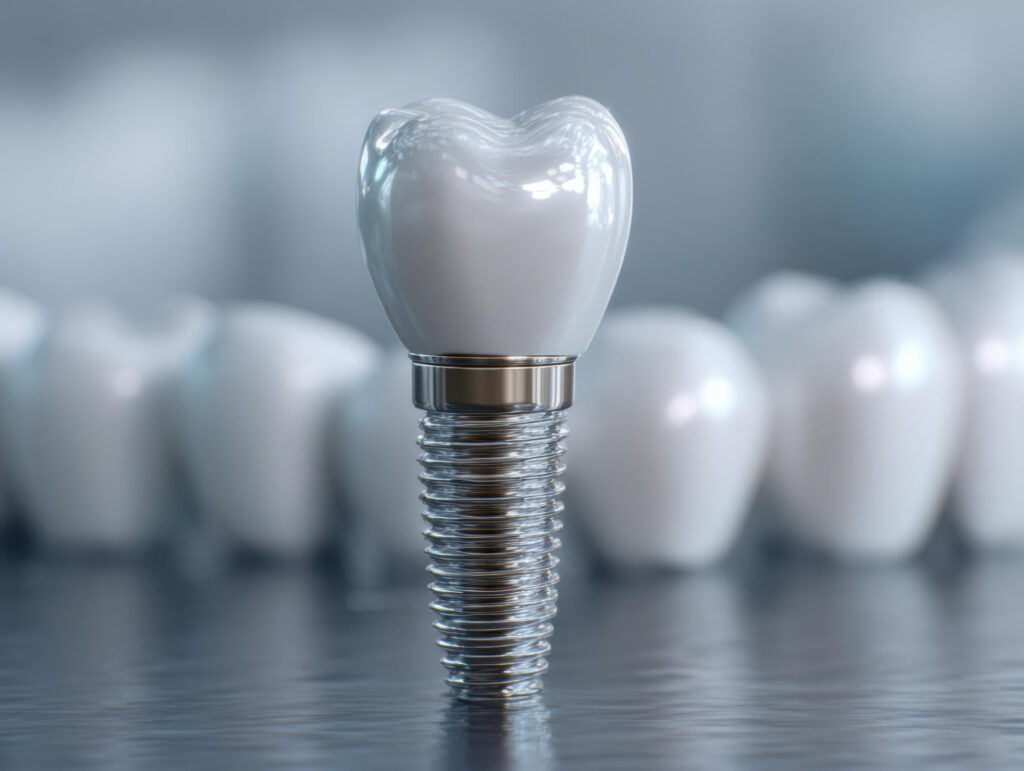
A dental implant replaces a missing tooth by placing an implant fixture, or artificial tooth root, into the jawbone. After it integrates with the bone, an abutment and custom crown are attached to restore appearance, chewing and bite function.
Unlike a traditional bridge or removable denture, an implant is an independent restoration and usually does not rely on neighboring teeth for support. This helps preserve healthy adjacent teeth while providing a crown that looks and functions more like a natural tooth.
Untreated tooth loss can affect chewing and appearance, allow neighboring teeth to shift and contribute to bite changes, gum problems and bone loss. If a tooth is lost through decay, gum disease or injury, an early dental assessment can determine whether implant treatment is suitable.
What Types of Tooth Loss Can Implants Treat?
Dental implants can restore different patterns of tooth loss. The dentist will recommend a plan based on the number and location of missing teeth and your oral condition.
Single Missing Tooth
A single missing tooth can be restored with one implant and one crown without preparing the healthy teeth on either side.
Multiple Missing Teeth
Several adjacent missing teeth may be restored with an implant-supported bridge using multiple implants for support.
Full-Arch Tooth Loss
For a full arch of missing teeth, several implants may support a fixed full-arch restoration or an implant-retained over denture, depending on bone condition and treatment needs.
Who Is Suitable for Dental Implants?
Dental implants may suit people who want to replace missing teeth, restore function and improve oral health. Many single, multiple or full-arch tooth loss cases can be considered when the jawbone and gums are suitable.
Implant treatment may be considered if you:
- Are missing one tooth and want a fixed replacement
- Are missing several teeth and want to restore chewing function
- Have extensive or full-arch tooth loss and may benefit from multiple implants
- Prefer not to wear a removable denture
- Want to preserve neighboring natural teeth where possible
- Are not well suited to a bridge or prefer an independent restoration
Suitability is assessed with a dental examination and imaging such as a panoramic X-ray or CBCT scan. Bone height and width, gum health and overall oral condition are reviewed before a personalized implant plan is made.

Benefits of Dental Implants
Preserve Neighboring Natural Teeth
An implant usually does not require healthy neighboring teeth to be filed down for support, helping preserve more natural tooth structure.
High Stability
Once the implant integrates with the jawbone, it provides stable support for the crown. Compared with removable dentures, it is less likely to move while chewing.
A Long-Term Tooth Replacement Option
When an implant integrates successfully and oral hygiene is maintained, it can serve as a long-term tooth replacement. Actual lifespan varies with oral health, bite and daily care.
Helps Maintain Jawbone
After tooth loss, the jawbone can gradually shrink because it receives less stimulation. An implant transfers chewing forces to the bone, helping maintain bone function and slow bone loss.
Natural-Looking Appearance & Chewing
The implant crown is custom-made to match the shape, size and color of your teeth. It can provide a natural appearance and chewing function closer to that of a natural tooth.
Implants vs Bridges vs Removable Dentures
Common options for missing teeth include dental implants, bridges and removable dentures. Each suits different situations, so your dentist will recommend an option based on the missing teeth, oral health and individual needs.
| Compare | Dental Implants | Dental Bridge | Removable Dentures |
|---|---|---|---|
| How It Works | Implant root with a crown | Bridge supported by neighboring teeth | Denture supported by gums and remaining teeth |
| Prepare Nearby Teeth? | Usually no | Yes | No |
| Stability | High | High | Depends on design and oral condition |
| Removable? | No | No | Yes |
| Suitable For | Single, multiple or full-arch tooth loss | One or a few missing teeth | Multiple or full-arch tooth loss |
| Daily Cleaning | Similar to natural teeth | Clean under the bridge | Remove and clean daily |
How It Works
Dental Implants
Implant root with a crown
Dental Bridge
Bridge supported by neighboring teeth
Removable Dentures
Denture supported by gums and remaining teeth
Prepare Nearby Teeth?
Dental Implants
Usually no
Dental Bridge
Yes
Removable Dentures
No
Stability
Dental Implants
High
Dental Bridge
High
Removable Dentures
Depends on design and oral condition
Removable?
Dental Implants
No
Dental Bridge
No
Removable Dentures
Yes
Suitable For
Dental Implants
Single, multiple or full-arch tooth loss
Dental Bridge
One or a few missing teeth
Removable Dentures
Multiple or full-arch tooth loss
Daily Cleaning
Dental Implants
Similar to natural teeth
Dental Bridge
Clean under the bridge
Removable Dentures
Remove and clean daily
Dental Implant Treatment Process
Implant treatment is personalized because tooth position, bone condition and oral health vary. A detailed assessment is completed before the implant plan is confirmed.
Dental Exam & Implant Assessment
The dentist checks your teeth, gums and bite, reviews the missing tooth area and assesses your suitability for implant treatment.
X-Ray & CBCT Scan
A panoramic X-ray and CBCT scan are commonly used to assess jawbone height, width and density and the position of important structures such as nerves and the maxillary sinus.
Personalized Implant Plan
The dentist plans the number and position of implants and whether bone grafting or other supporting treatment may be needed, then explains the expected stages and treatment time.
Place the Dental Implant
The procedure is generally performed under local anesthetic. The implant is placed into the jawbone and the area is sutured if needed. Procedure time depends on the number of implants and treatment complexity.
Healing & Osseointegration
The implant is given time to integrate with the jawbone. Healing time varies with the treatment site, bone quality and individual recovery, and the next stage is arranged once the implant is stable.
Fit the Dental Crown
Once the implant is stable, an abutment and custom crown are fitted and the bite and appearance are adjusted to complete treatment.
Dental Implant FAQs
Learn more about Dental Implant and common concerns.
Is dental implant surgery painful?
Implant placement is generally performed under local anesthetic, so significant pain is not normally felt during the procedure. Mild swelling or discomfort may occur afterwards and usually improves over a few days.
How long does dental implant treatment take?
Treatment time varies with bone condition, implant location and whether bone grafting is required. Your dentist will explain the expected timeline after assessment.
How long do dental implants last?
With successful integration, good oral hygiene, regular reviews and professional cleaning, implants can often function for many years. Lifespan varies with oral health, lifestyle and daily care.
Do all dental implants require bone grafting?
No. Bone grafting is not usually needed when there is sufficient bone height and width. If bone volume is inadequate, grafting may be recommended to provide better support.
Can a failed dental implant be treated again?
Possibly. Re-treatment depends on why the implant failed and the condition of the bone and mouth. The dentist will assess the area before recommending the next step.