
Root Canal Treatment
Root Canal Treatment | Save Your Natural Tooth
Root canal treatment removes infected pulp tissue, helps control infection, preserves the natural tooth, reduces the need for extraction, and maintains normal chewing function.
What Is Root Canal Treatment?
Root canal treatment treats an infected or inflamed dental pulp, often called the tooth nerve. The infected pulp is removed to help save the natural tooth and avoid extraction where possible.
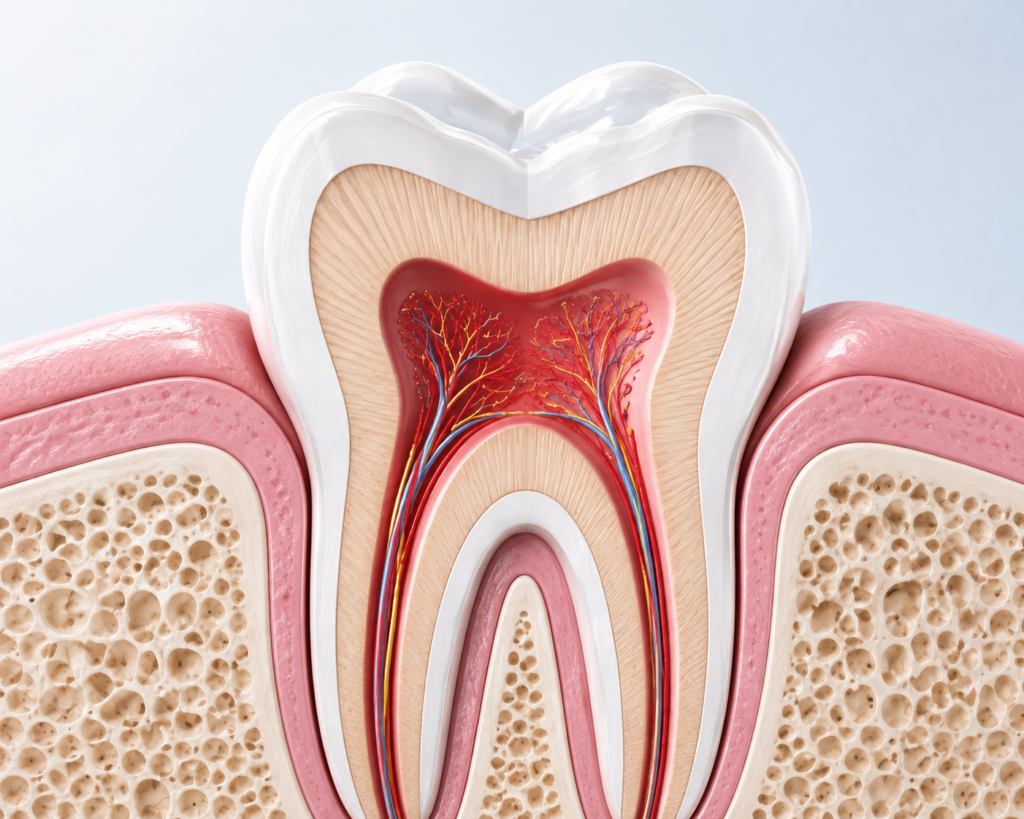
Inside each tooth is the dental pulp, which contains nerves, blood vessels and connective tissue. Deep decay, cracks, trauma or bacterial infection can inflame or damage the pulp, causing persistent toothache, swelling or infection around the root.
During root canal treatment, infected pulp is removed and the root canals are thoroughly cleaned, disinfected and sealed to reduce reinfection. The tooth is then restored with a filling or dental crown, depending on the remaining structure and bite.
When a tooth can still be restored, root canal treatment is often considered before extraction because keeping the natural tooth helps preserve chewing function and bite alignment.
When Is Root Canal Treatment Needed?
Not every toothache needs a root canal. Treatment may be required when the pulp is infected, severely inflamed or no longer viable, especially if infection could spread to the root or surrounding tissues.
Further assessment may be recommended if you have:
Deep tooth decay
Decay has reached the pulp and infected the nerve
Persistent toothache
Ongoing or throbbing pain even when not eatin
Lingering hot or cold sensitivity
Pain continues after the stimulus is removed
Root-tip inflammation or abscess
Swelling, pus or repeated infection around the root
Tooth discoloration
A tooth becoming grey or darker because the pulp has died
Ongoing pain after a large filling
The pulp may remain inflamed after extensive restoration
Persistent discomfort after extensive dental fillings
After extensive dental fillings, the dental pulp in some teeth may become inflamed due to irritation.
Symptoms alone cannot confirm whether a root canal is needed. The dentist will examine the tooth, perform pulp tests and review X-rays before recommending treatment.
Benefits of Root Canal Treatment
The main goal is to control infection while preserving your natural tooth. Keeping the tooth can help maintain normal chewing, tooth alignment and oral health, while reducing the need for later replacement with an implant, bridge or denture.
Key benefits include:
Save the natural tooth
Preserve chewing and bite function when the tooth can be restored
Control pulp infection
Remove infected or dead pulp and reduce bacterial spread
Relieve pain and discomfort
Address toothache, swelling and sensitivity caused by pulp inflammation
Maintain chewing function
Restore the tooth so it can continue to function normally
Reduce tooth movement
Avoid neighboring teeth tilting or shifting into an extraction space
Reduce future restorative needs
Keeping the tooth may avoid more complex replacement treatment
Dentists generally aim to preserve natural teeth where practical, so root canal treatment is often considered before extraction when the tooth remains restorable.
Root Canal Treatment Process
The number of visits depends on the infection and root canal anatomy. Some cases can be completed in one appointment, while more complex teeth may need several visits. Your dentist will assess the tooth and explain the treatment plan first.
Dental Exam & X-Ray
The dentist examines the tooth and reviews X-rays to assess the pulp infection, root anatomy, number of canals and surrounding bone.
Local Anesthetic
Before whitening, the dentist checks your teeth and gums to confirm suitability. Your current tooth shade is then recorded with a shade guide for comparison after treatment.
Remove Infected Pulp
A small access opening is made in the tooth. Special instruments are used to remove infected or dead pulp and locate the root canals.
Clean & Disinfect the Canals
The canals are cleaned, shaped and disinfected to reduce remaining bacteria and lower the risk of reinfection.
Fill & Seal the Canals
Once clean, the root canals are filled and sealed with dedicated material to help prevent bacteria re-entering the tooth.
Restore the Teeth
After root canal treatment, the tooth is restored with a filling or dental crown based on the remaining tooth structure, helping restore shape and chewing function and protect it from fracture.
What to Expect After a Root Canal
Mild discomfort for a few days can be normal while the tooth and surrounding tissues recover after root canal treatment.
Common temporary effects include:
- Mild soreness when biting: the treated tooth may feel tender for a few days after the anesthetic wears off
- Temporary sensitivity: some teeth may be briefly sensitive to biting pressure
- Mild swelling or tenderness: this may occur if inflammation was already present around the root; medication may be prescribed if needed
- Temporary filling: if treatment is completed in stages, a temporary filling may be placed until the final root canal and restoration are completed
Contact your dentist promptly if you develop persistent severe pain, marked swelling, pus, fever or loss of a temporary filling.

Root Canal Treatment FAQs
Learn more about Root Canal Treatment and common concerns.
Is root canal treatment painful?
Treatment is usually performed under local anesthetic, so significant pain is not normally felt during the procedure. Mild soreness or bite tenderness may occur afterwards and generally improves within a few days.
How many visits does a root canal need?
It depends on the severity of infection, number of roots and canal anatomy. Some cases can be completed in one visit, while more complex or infected teeth may require two or three visits.
Do I always need a crown after a root canal?
Not always. Whether a crown is needed depends on the tooth position, remaining structure and bite. Not every root-treated tooth requires a crown.
Back teeth take heavier chewing forces, so a crown is often recommended when much tooth structure has been lost. Some front teeth with enough healthy structure may be restored with a filling instead.
How long can a root-treated tooth last?
There is no fixed lifespan. Longevity depends on remaining tooth structure, the final restoration, oral hygiene, bite and regular dental care. With proper care, a root-treated tooth can function for many years.
Is pain after a root canal normal?
Mild soreness, bite discomfort or tenderness for a few days can be part of normal recovery. Contact your dentist if pain worsens or is accompanied by swelling, pus or fever.